Technology Explained
Which Farm Camera Do You Need? 6 Buyer Questions, Answered
"Single vs dual vs multi-lens, AOV vs event-triggered, 4G vs WiFi, 4G data use, PTZ vs fixed, plug-in vs solar — answered the way farm buyers ask them, with spot-by-spot guidance."
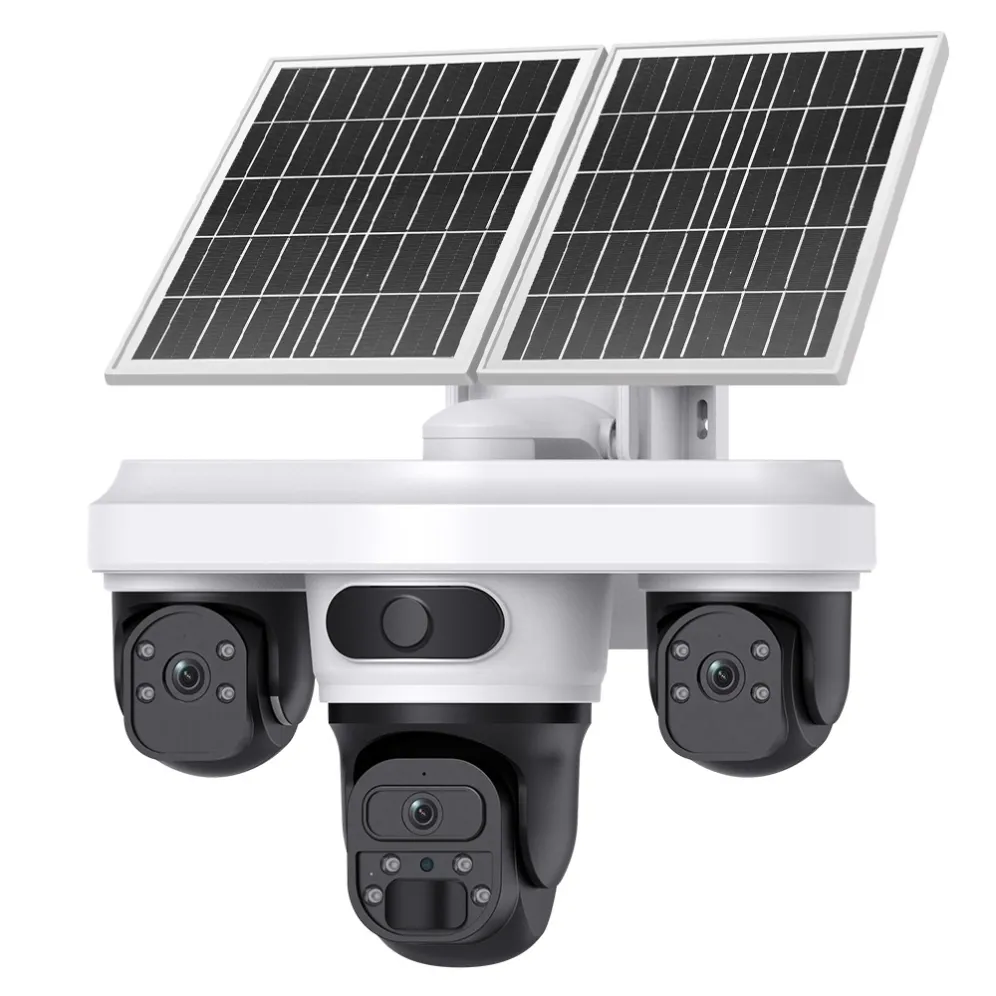
The six answers in one line each
- Lenses: a single-lens camera sees one scene; dual- and multi-lens cameras give several simultaneous views from one unit.
- Recording: AOV (Always-On Video) records the full timeline at low power; a normal event camera records only triggered clips.
- Connection: WiFi is free and local; 4G works anywhere there is signal — choose 4G where there is no WiFi.
- Data: an event-mode 4G camera typically uses about 5GB a month in normal use; AOV and heavy remote viewing use more.
- Movement: a fixed camera watches one scene 24/7; a PTZ rotates and zooms between positions.
- Power: plug-in is steady but needs a cable; solar is cable-free but runs on a finite power budget.
Who this guide is for
Farm and ranch owners choosing between camera types for specific spots — the gate, the barn, the water trough, the equipment yard. Dealers and brand owners who get these questions every week and want one page to answer from. And buyers comparing quotes who want to compare like-for-like features instead of headline specs.
Q1. How many lenses do I need — single, dual or multi?
Short answer: lens count decides how many views one camera can give you at the same time. One lens, one scene. Two or more lenses, several views from a single housing.
- Single-lens is the workhorse. One lens, one aimed view — a gate, a door, a specific corner. You point it and that is what you get, day and night. It is the simplest and usually the most affordable, and for most farms it covers most spots.
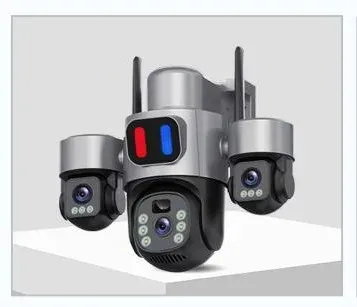
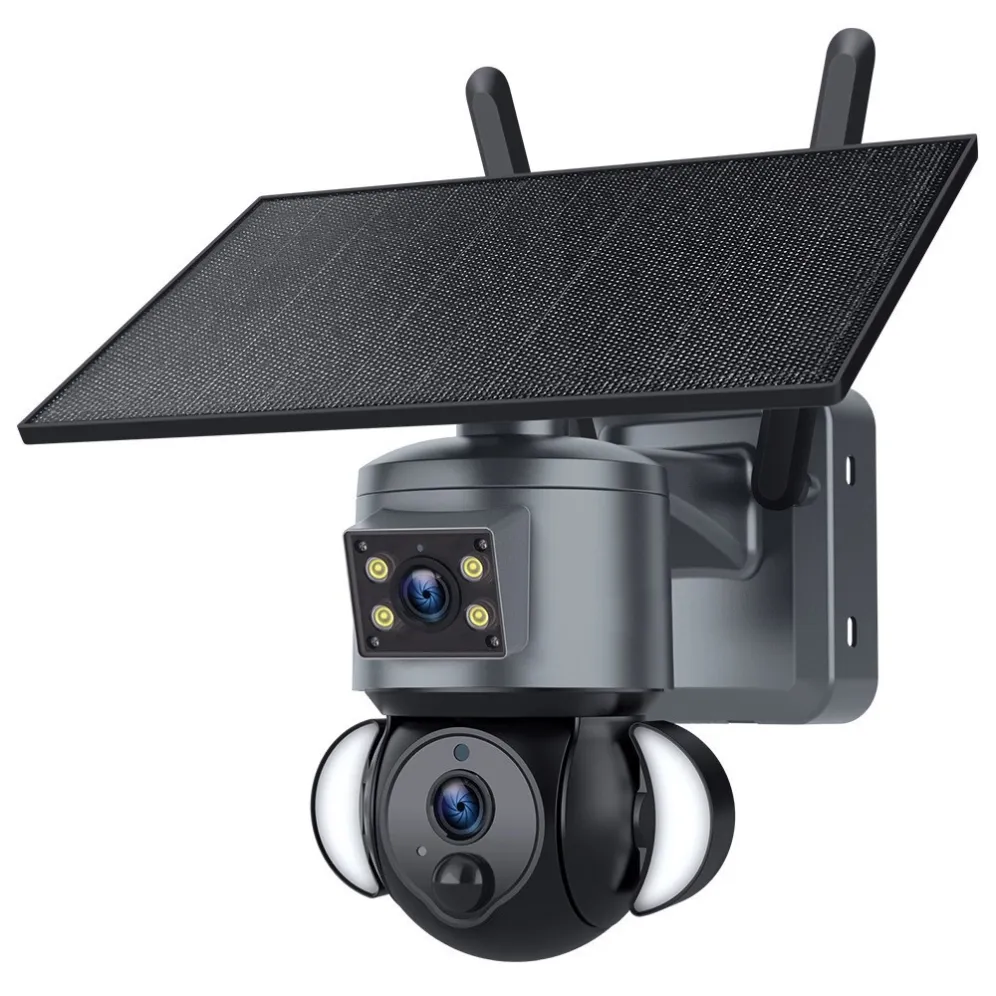
- Dual-lens puts two lenses in one camera, typically one wide and one telephoto, or two fixed directions. One unit can show the whole yard and a zoomed-in detail at the same time, or watch two angles that would otherwise need two cameras on two mounts.
- Multi-lens (three or more) adds more simultaneous views in one housing — several directions from one corner, or a wide overview plus close detail. It earns its place where mounting points are few but the area is wide: a barnyard corner, a crossroad, a fuel area.
What more lenses are not: they do not add range or better night vision — each lens still depends on its own light, and all share one battery and solar budget.Farm spots: single-lens for gates, doors and choke points; dual-lens where you want overview plus detail without a second mount; multi-lens for wide open corners with only one good mounting point.Spec check: number of lenses and what each lens is for (wide or telephoto), resolution per lens, field of view per lens, and whether the lenses record simultaneously.
Q2. What does AOV mean, and is it better than a normal event camera?
Short answer: AOV (Always-On Video) records continuously at low power. A normal event camera sleeps most of the time and wakes to record short clips when its sensor triggers. Both are legitimate; they answer different questions.
- Event-triggered is the battery-friendlier choice. The camera sleeps to save power, wakes on motion, and saves short clips. You get long run times and low card use — but you trust the trigger, and you can miss what happened just before it, or a slow quiet event the sensor never classifies.
- AOV keeps recording the whole timeline. You can scroll back to any moment, not just the clips the sensor decided to save. That matters at pens, water troughs, chutes — anywhere a quiet 30 seconds can be the moment you needed.
The cost side is real: continuous recording uses more power and card space than event-only. On solar, match AOV with an adequate panel and battery, or run AOV only where the full timeline matters and event mode everywhere else.What AOV is not: it does not mean the camera is always streaming to your phone. Footage still records to the local card, and remote viewing still needs a connection — WiFi or 4G.Which is better is therefore a trade-off, not a winner: choose AOV where missing a moment is worse than using more power, and event mode where battery life matters more than completeness.Farm spots: AOV at the pen, the water point, the chute, or any spot where you cannot miss "the moment before." Event mode on fences, driveways and low-activity areas.Spec check: does the model support AOV, what is the power draw in AOV mode, the maximum card size, and whether AOV and event mode can be set per camera.
Q3. 4G or WiFi — which should my farm camera use?
Short answer: use WiFi where you have it, and 4G where you do not — or where you want alerts that do not depend on the house network.
- WiFi needs no SIM and no data plan. The connection is free, and it works well near buildings with a router or extender. The limit is range: barns, pastures and distant sheds usually sit outside the WiFi signal.
- 4G needs a SIM card and a data plan, but it works anywhere the mobile network reaches. For a remote spot, 4G is the difference between seeing the clip on your phone and driving out to check. On price, the 4G APAC version is close to the WiFi version, so the premium for remote alerts is smaller than many buyers expect.
- The reality: about 28% of rural US homes lack broadband (FCC), and even where coverage maps look good, the actual spot may have a hole. Check coverage at the exact location before you buy.
- One thing both share: the connection is about remote viewing and alerts, not recording — local-card recording works with either, and neither replaces power.
Farm spots: WiFi for the yard and buildings; 4G for pasture, distant sheds, seasonal camps, and anywhere you want alerts without relying on the house network.Spec check: WiFi band and practical range, which 4G region your version covers (APAC, EU, NA and LATAM versions differ), SIM requirements, and whether the camera supports both connections.
Q4. How much data does a 4G farm camera use per month?
Short answer: around 5GB a month in normal use — event-mode recording with a few app checks a day. The real range depends on how you use it: event mode pushes only short clips and alerts; AOV continuous recording and frequent live viewing push a lot more. The camera records to the local card regardless, so the SIM budget is about what you watch from your phone, not what it films.Farm spots: 5GB typically fits a month of event-mode alerts and occasional viewing on one pasture camera; budget more if you run AOV or watch live often, and confirm the plan's data cap before signing up.Spec check: data behavior per mode (event vs AOV vs live viewing), whether clips are compressed before upload, and SIM/eSIM options for your region.
Q5. Should I get a PTZ camera or a fixed one?
Short answer: a fixed camera watches one scene permanently. A PTZ (pan-tilt-zoom) camera can rotate and zoom to different positions, on command or on a preset tour.
- Fixed is always pointed where you aimed it and always recording that view — no moving parts, simpler, usually more affordable. The right choice for a gate, a door, or anywhere you want the same view around the clock.
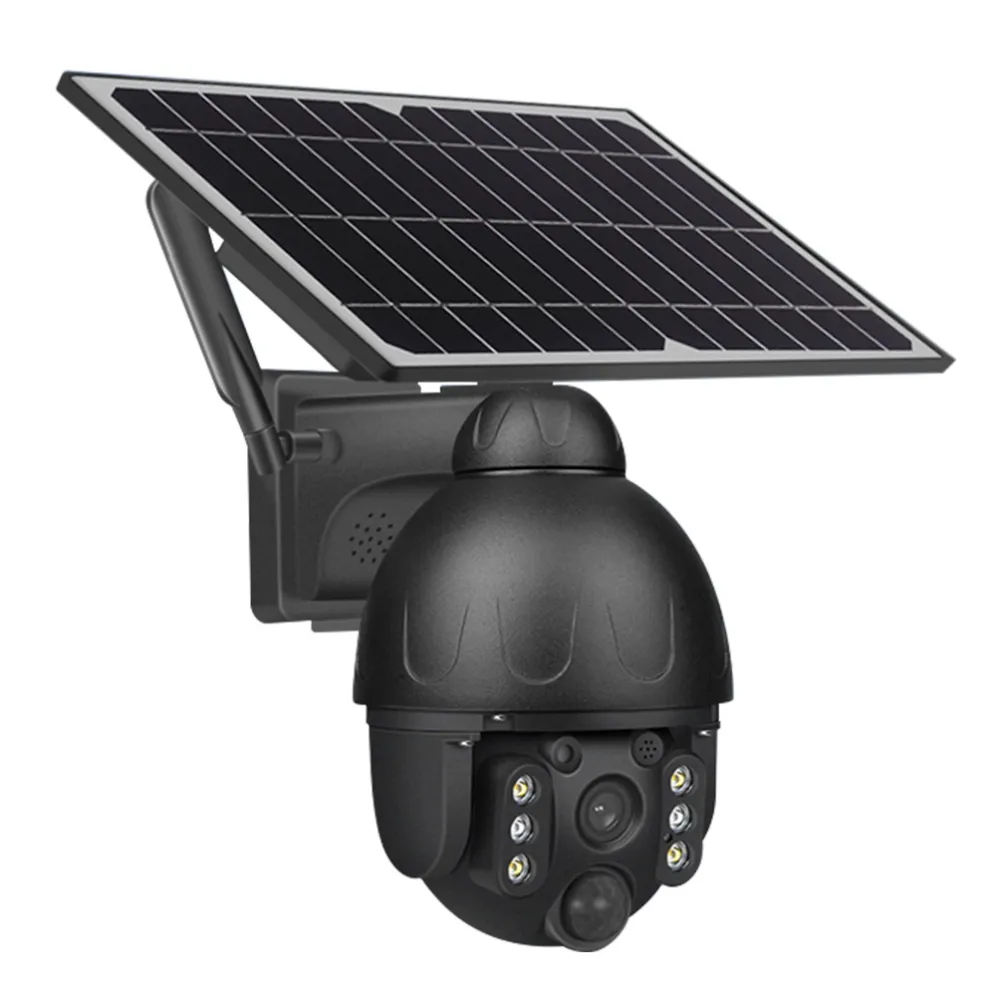
- PTZ moves to positions and zooms in on detail, so one unit can watch several spots in rotation, or inspect a specific object — a machine, a tag number, a fence break — without you climbing up. Useful where one camera must cover a wide area, or where you want an inspection tool as well as a watcher.
- The trade-offs are honest: a PTZ looks at one position at a time — while it pans to the shed, the yard is not watched. Moving parts use power and can fail. Preset tour points help, but coverage rotates, not simultaneous.
- Most buyers combine them: fixed cameras on the spots that must never be missed, and one PTZ for the wide area or for "look at that thing now" checks.
Farm spots: fixed at gates, doors and the equipment yard corners that always need watching; PTZ where one camera must cover several areas or where you want to zoom into distant detail. Prefer optical zoom for distance — it magnifies without losing resolution.Spec check: pan and tilt range, number of preset tour points, zoom type (optical vs digital), and whether PTZ movement itself triggers recording.
Q6. Plug-in or solar — which is right for my spot?
Short answer: plug-in gives you steady, unlimited power; solar makes the camera independent of cables. Choose by whether the spot has power and how hard running a cable would be.
- Plug-in (wired) means consistent power and no battery anxiety. It suits 24/7 AOV and power-hungry features — strong lights, frequent PTZ movement. The catch is the cable: the run costs time and conduit, and a thief can cut it. If the power fails, the camera stops unless you add a backup.
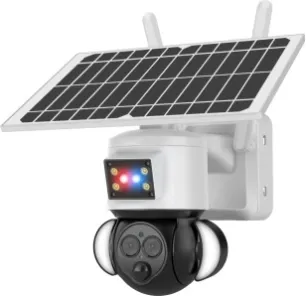
- Solar charges the battery by day and runs the camera through the night and on cloudy stretches — no cable, no power line to cut, install anywhere a bracket fits. The catch is the power budget: it is finite. Event mode and modest features fit comfortably; continuous recording, heavy lights and constant PTZ use need a bigger panel and battery, or a sunnier spot. Cold weather shortens lithium capacity and efficiency by roughly 20–50%, and charging below 0°C is risky — plan winter accordingly. Panel placement matters more than people think: face it toward the sun and keep it clear of shade and snow, and a modest panel outworks a bigger one badly aimed.
- The practical answer is usually a mix: plug-in where power is easy and demand is high (yard, buildings), solar where the spot is remote or the cable would be long and vulnerable.
- One rule applies to both: when power is lost, recording and storage pause, and clips already saved on the card stay there. That is true of every camera, whichever way it is powered.
Farm spots: plug-in at the yard, workshops and buildings; solar at the gate, pasture, distant sheds and anywhere a cable is impractical.Spec check: panel wattage and battery capacity matched to your sunlight and recording mode, power draw in your chosen mode, operating temperature range, and whether a plug-in variant of the same feature set exists.
Putting it together: a mixed system, not one winner
A workable farm setup rarely uses one type. A common pattern: plug-in cameras where power is easy, AOV at pens and water points, event mode on fences; a solar 4G camera with light and siren at the gate so a cut cable kills nothing; a dual- or multi-lens unit, or one PTZ, at the equipment yard; solar 4G event-mode cameras on pasture, checked from the APP. The goal is to match each spot's power, connection and attention needs — the placement guide and solar-vs-wired comparison go deeper, and the 26-question FAQ answers the everyday follow-ups.Ask us before you buy. Tell us the spot — power available, WiFi or not, what you need to see — and we will suggest the camera class and what to check, not a sales pitch. Visit www.keencampro.com, message us on WhatsApp at https://wa.me/8618948579719, or email diana@keencampro.com.#KeenCamPro #FarmSecurity #CameraComparison