Sep 19, 2026Buying Guides
Solar Camera Battery and Panel Guide: From 6000mAh to 20000mAh
Battery capacity, panel wattage and standby current decide whether a solar camera survives cloudy weeks. A spec-driven way to size a solar security camera.
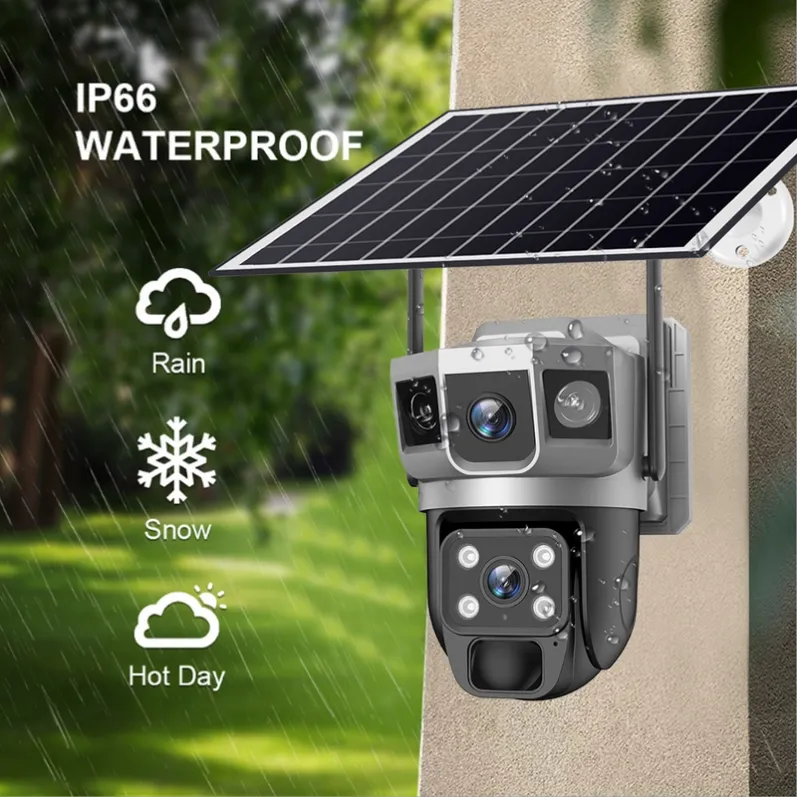
A solar camera's uptime is decided by three numbers: battery capacity, panel wattage and standby current. Get them wrong and the camera goes dark after a few cloudy days. The KeenCamPro catalog makes these figures explicit on each model page, which makes sizing straightforward.
Battery capacity across the catalog
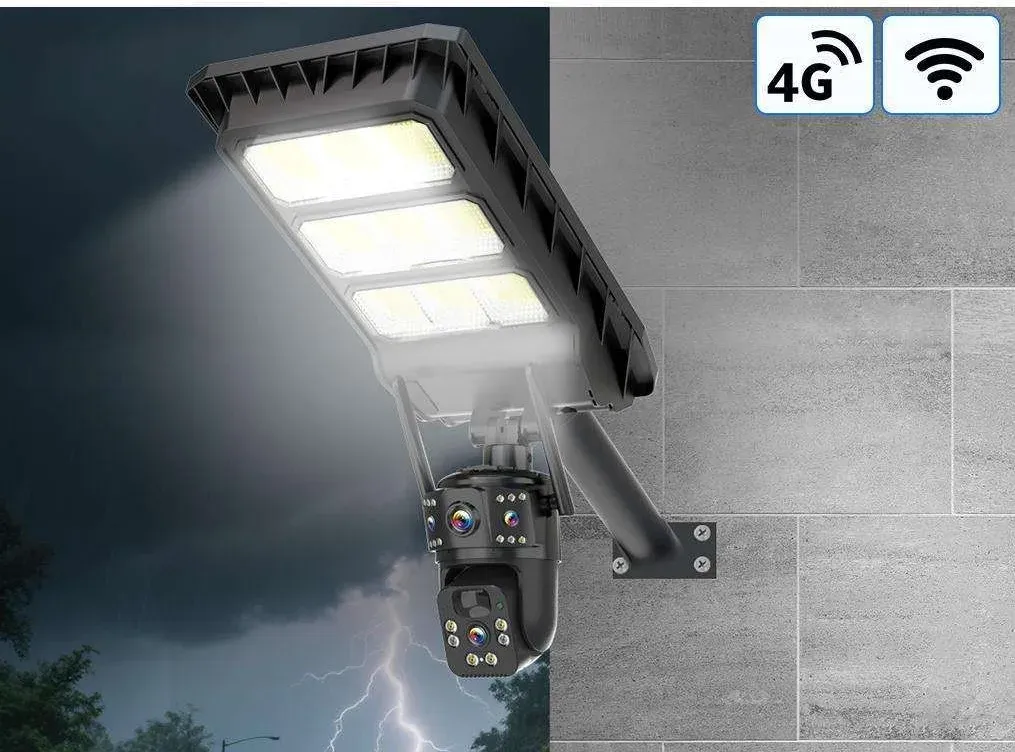
Capacity scales with the workload. Compact solar models use 6000mAh to 7800mAh, multi-lens PTZ models use 8000mAh to 10800mAh, and the solar street lamp camera uses a 20000mAh pack of ten cells so it can record all day and light up at night.
Panel wattage and charging
Most catalog solar cameras pair a 7.5W panel with 5V Type-C charging, while the solar street lamp model uses a 12W panel. A low standby figure such as 5mA on a spec sheet means the panel can keep the battery topped up even on days with limited sun.
Sizing rules of thumb
Match battery capacity to the number of cloudy days you expect, keep panels clear of shade and snow, and confirm the operating temperature range printed for the model, which reaches -30°C to +50°C on some flagship outdoor cameras. Tell us the site conditions and quantity so we can advise on the right model.
Battery and panel sizes across the range
Solar cameras are not one size. In the KeenCamPro solar range, internal battery capacity runs from 6000mAh on the smaller dual-lens PTZ models to 10800mAh on the larger multi-lens units, and up to 20000mAh on the all-day recording models. Solar panel rating rises with it, from 7.5W on the compact solar PTZ bodies through 12W, up to 20W and 30W on the longer-zoom models.
The larger battery and panel combinations exist for a reason. A camera that records all day, or one fitted with 10x to 36x optical zoom, draws more energy than a compact PTZ that only wakes on a trigger. Matching the panel to the workload is what keeps the camera running through shorter winter days.
Which combination suits which site
For a home or a small yard with good sun, a 6000mAh battery with a 7.5W panel on a dual-lens PTZ camera is usually sufficient. For a farm, a construction site or a remote gate where the camera must record continuously, choose the larger battery packs - 10800mAh or 20000mAh - and the higher-output panel models, which run up to 20W and 30W. Cameras with optical zoom also benefit from the larger panels, because the zoom mechanism and the higher-detail sensor both draw more power.
Questions buyers ask about solar power
How long does the battery last? Runtime depends on how often the camera records, the resolution and the amount of sunlight. A solar camera is designed to recharge from its panel during the day, so in normal outdoor use it does not need to be taken down for charging.
What happens in cloudy weather? The battery carries the camera when the panel output drops. That is the main reason to choose a larger battery capacity for a site with frequent overcast days or long winter nights.
What is the charging interface? The solar models in this range charge over a 5V Type-C interface, so a standard USB supply can top the battery up if the panel cannot keep pace.
How much storage is supported? Recording is stored on a TF card, typically 32GB to 256GB, with cloud storage supported alongside it.