Sep 8, 2026Buying Guides
How to Choose the Right Security Camera
Learn how to choose the right security camera—solar vs plug‑in, WiFi vs 4G, image quality, durability. KEENCAMPRO offers CE/RoHS/FCC certified solutions for global projects.
How to Choose the Right Security Camera
What This Article Covers
Selecting the right security camera for a project—whether it's a construction site in the Middle East, a farm in Africa, or a smart city deployment in Europe—can be overwhelming. With so many options available, from WiFi solar cameras and 4G solar cameras to plug‑in models and AOV cameras, how do you know which one is right for your specific needs?
This article breaks down the essential factors every buyer should consider before making a decision. We’ll cover power sources, connectivity options, image quality, durability—so you can make an informed choice that protects your investment and delivers reliable surveillance for years to come.
Why You Need to Know This
The global solar‑powered security camera market was valued at approximately USD 2.66 billion in 2025 and is projected to reach USD 8.91 billion by 2033, growing at a compound annual growth rate of 16.7%. This rapid growth means more suppliers are entering the market—but not all cameras are built to the same standard.
For procurement managers, system integrators, and project owners, choosing the wrong camera can lead to costly consequences:
- Premature failures due to poor battery quality or inadequate weather sealing
- Unreliable connectivity in remote areas without WiFi coverage
- Insufficient power during cloudy seasons, leaving sites unmonitored
- Hidden costs from frequent battery replacements, site visits, or system upgrades
A well‑chosen camera, on the other hand, delivers lower total cost of ownership, fewer service calls, and peace of mind that your assets are being monitored 24/7. Understanding what to look for separates a reliable long‑term partner from a transactional supplier.
How to Choose the Right Camera: Key Factors
1. Power Source: Solar vs. Plug‑in
The first and most important decision is how your camera will be powered.
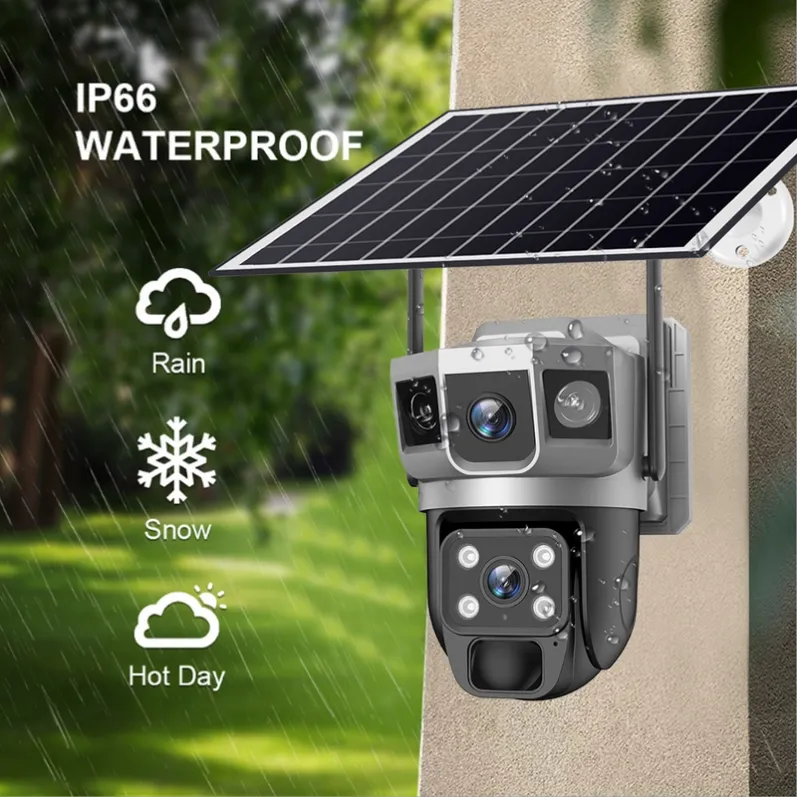
Solar‑Powered Cameras are ideal for locations without access to the electrical grid—remote farms, construction sites, forests, and off‑grid facilities. When evaluating solar cameras, pay attention to:
- Solar Panel Efficiency – Look for high‑efficiency panels (≥3W) that can generate enough power even in less‑than‑ideal sunlight conditions.
- Battery Capacity – A larger battery (≥5,000 mAh) ensures the camera continues operating through cloudy days and overnight. Most outdoor solar cameras need at least 2 to 4 hours of direct sunlight daily to stay reliably charged.
- MPPT (Maximum Power Point Tracking) – This technology optimizes solar charging efficiency, particularly important in varying light conditions.
Plug‑in Cameras are the better choice when stable AC power is readily available—urban settings, offices, retail spaces, and residential properties. They offer continuous power without reliance on sunlight, making them suitable for high‑traffic areas requiring 24/7 recording.
2. Connectivity: WiFi vs. 4G
Your choice of connectivity determines where the camera can be deployed.
- WiFi Cameras connect through a local router and are ideal for locations with strong, stable WiFi coverage—homes, offices, and urban infrastructure. They typically consume less power than 4G cameras, making them more energy‑efficient.
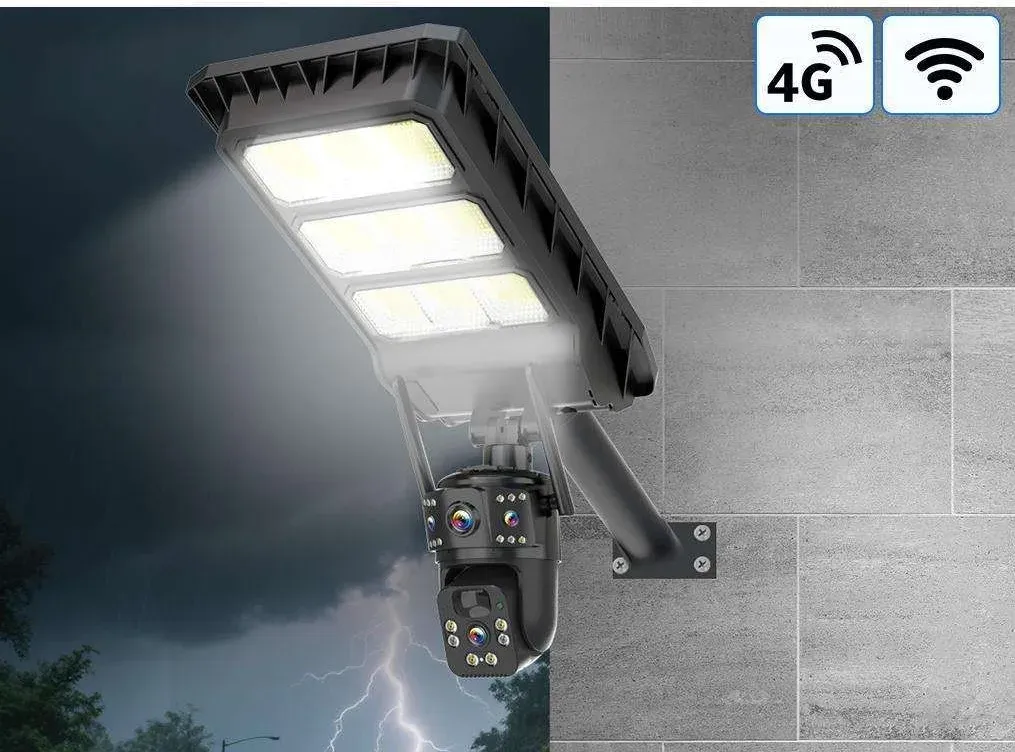
- 4G/LTE Cameras use a cellular SIM card and work anywhere with mobile signal coverage. This makes them the go‑to choice for remote locations without WiFi—construction sites, agricultural estates, oil fields, and border areas.
Pro Tip: If your project covers a mix of locations, consider a hybrid approach—WiFi for dense urban sites and 4G for remote deployments.
3. Image Quality and Resolution
Clear footage is the whole point of a security camera. For identifying faces, license plates, or suspicious activity, look for:
- At least 1080p HD resolution for clear, identifiable footage
- Good night vision capabilities—infrared or full‑color night vision—for 24‑hour surveillance
4. Durability and Weather Resistance
Outdoor cameras face extreme conditions—scorching heat, freezing cold, rain, dust, and high winds. Look for:
- IP66 or higher weatherproof rating to ensure protection against dust and heavy rain
- Wide operating temperature range—cameras should function reliably from sub‑zero winters to desert heat
- Rugged housing that can withstand physical impact and vibration, particularly important for construction and industrial sites
5. Certifications and Compliance
For international projects, certifications matter. CE, RoHS, and FCC certifications confirm that products meet safety, environmental, and electromagnetic compatibility standards for Europe, North America, and many other regions. Always verify that your supplier holds these certifications—they are not just stickers but evidence of systematic quality control.
Perfect for These Scenarios
Different projects require different solutions. Here‘s how to match the camera type to your application:
Scenario | Recommended Camera Type | Why |
|---|---|---|
Construction Sites & Mining Areas | 4G Solar Camera | No grid power or WiFi; needs rugged, weather‑resistant design |
Agricultural Estates & Livestock Farms | 4G Solar Camera | Remote locations; wide‑area monitoring; off‑grid operation |
Smart Cities & Urban Infrastructure | WiFi or Plug‑in Camera | Stable power and network available; high‑traffic areas need continuous recording |
Forest Fire & Environmental Monitoring | 4G Solar Camera | Extremely remote; no infrastructure; needs autonomous operation |
Residential & Commercial Properties | WiFi Solar or Plug‑in Camera | Easy installation; existing WiFi and power; everyday security needs |
Oil Fields, Ports & Industrial Facilities | 4G Solar or Plug‑in | Harsh environments; may have power but no network; needs extreme durability |
Off‑Grid Remote Sites | 4G Solar Camera | No power, no network—fully autonomous surveillance required |
Ready to Find the Right Camera for Your Project?
At KEENCAMPRO, we understand that every project is unique. That‘s why we offer a comprehensive range of security cameras—WiFi solar cameras, 4G solar cameras, plug‑in cameras, and AOV cameras—designed to meet the demands of projects across Europe, the Middle East, Africa, Asia, Australia, and South America.
All our products carry CE, RoHS, and FCC certifications, and we support OEM and ODM services to customize solutions for your brand or specific requirements.
Visit KEENCAMPRO.COM to browse our product range, request a catalog, or send us your project specifications. Our sales team is ready to assist you—wherever you are.
Contact us today – let‘s find the perfect security solution for your next project.