Sep 19, 2026Technology Explained
What Is AOV in Solar Security Cameras? Always-On 24/7 Recording Explained
AOV, or always-on video, lets a battery camera record around the clock at very low power. Here is how it differs from PIR-triggered recording and when to specify it.
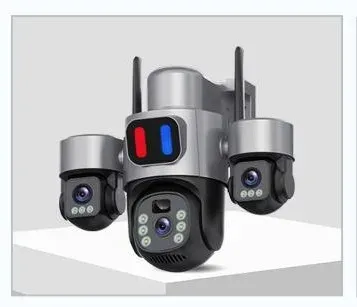
Battery cameras usually wake on a PIR trigger, record a short clip, then sleep again. AOV cameras take a different approach: they keep recording continuously at low power so nothing between triggers is missed. The catalog describes AOV models as built for 24-hour surveillance.
How AOV differs from event recording
An event camera spends most of the day asleep; its footage starts only when the sensor fires. An AOV camera records all day, so a person walking past a trigger zone without tripping it still appears in the footage. The catalog labels this as AOV 24-hour video recording on the models that carry it.
Where AOV appears in the catalog
AOV is offered across several solar families, from single-lens up to four-lens models. Battery capacity across the AOV models ranges from 6000mAh to 20000mAh, with the largest pack on the AOV solar street lamp camera. Night vision is described as infrared, full color and Smart Dual-Light, with starlight full color or ultimate full color available as options on some AOV models. These cameras are managed through the HiEasy app for iOS and Android.
When to specify an AOV camera
Specify AOV when continuous footage matters more than short event clips, such as entrances, driveways and stock yards. Pair the camera with the solar panel and TF card storage listed for that model, and send us your site conditions and target quantity so we can confirm the right AOV configuration for your order.
Where AOV sits in the range
KeenCamPro builds both AOV and PIR-triggered solar cameras, because the right choice depends on what has to be recorded. AOV models are the ones to specify when the site needs continuous coverage, such as a yard, a gate or a construction compound where an event can start before a sensor reacts. PIR models remain the efficient option when only movement matters and longer shelf life between charges is the priority.
The AOV part of the range spans several form factors. Two-lens AOV bodies cover wide scenes with a dual view, multi-lens AOV models add extra views from one housing, and the zoom AOV cameras pair an AOV sensor with optical zoom - the range includes 22x and 36x optical zoom AOV models. There are also AOV street lamp and floodlight variants that combine recording with lighting, and AOV models in a metal casing for exposed installations.
Questions buyers ask about AOV
What does AOV stand for? AOV means always-on video. The camera records continuously rather than waiting for a trigger, so no part of an event is missed at the start.
Does AOV use more power? AOV is designed to run continuously at low power, which is why it is paired with a solar panel in these models. Models in the range carry battery capacities from 6000mAh up to 20000mAh, with solar panels from 7.5W to 30W depending on the model.
Can an AOV camera run without mains power? Yes. The AOV cameras in this range are solar and battery powered, so they can be installed where there is no wiring. Power is stored in an internal battery and topped up by the solar panel.
How is the camera viewed? Recording is stored on a TF card, typically 32GB to 256GB, with cloud storage supported. Live view and playback run through the mobile app for the model; apps used across the range include EseeCloud, V380, HiEasy and O-KAM PRO.