Sep 19, 2026Buying Guides
4G vs WiFi Solar Security Cameras: How to Choose for Off-Grid Sites
Both 4G and WiFi solar cameras run without mains wiring, but they suit different sites. Compare network coverage, power, storage and regional versions.
A solar camera removes the power cable, but it still needs a way to send video. The choice between 4G and WiFi decides whether that camera works on a remote site or only near an existing network. This guide compares the two using the connection variants printed across the KeenCamPro catalog.
Coverage decides the connection
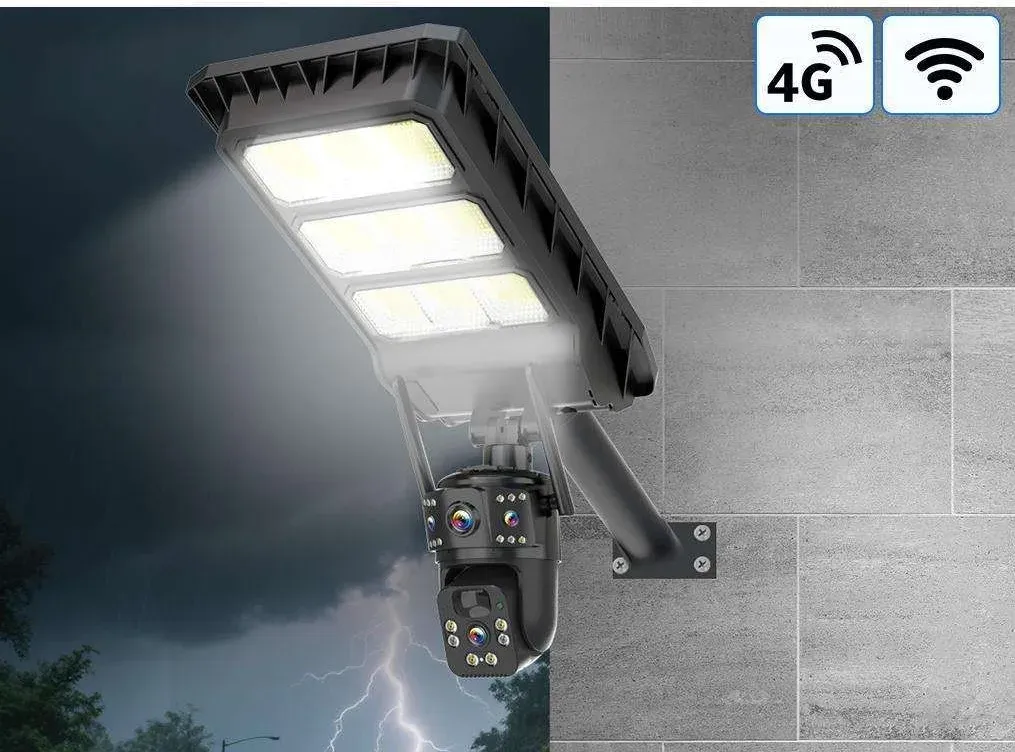
WiFi solar cameras need a reachable wireless network on site. 4G models need mobile coverage instead, which suits farms, construction sites and yards where no stable WiFi exists. Solar models are made in a WiFi version and in regional 4G versions, and the catalog lists the variants held for the main markets - APAC, EU, NA and LATAM - alongside the WiFi model. Coverage is not limited to those markets: if you are supplying Africa, Australia, the Middle East or any other region, confirm the variant required for the destination country when ordering and we will advise which version to specify.
Power and storage behave the same way
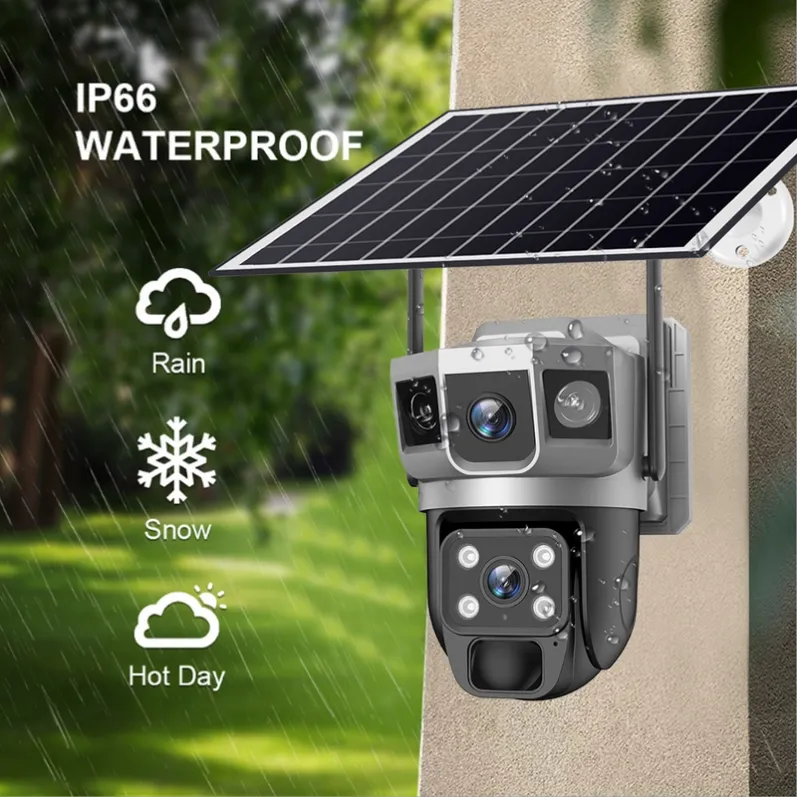
Connection type does not change the power budget. Catalog solar cameras pair 7.5W panels with batteries from 6000mAh on compact models up to 10800mAh on larger models and 20000mAh on the solar street lamp camera, and they record to TF cards of up to 256GB depending on the model, with optional cloud backup.
What to confirm before ordering
Confirm three things: the network coverage actually available at the site, the 4G region version for your market, and the night vision mode and detection range you need. Send these details with your target quantity so the correct configuration can be quoted.
How the two versions differ on site
The difference is the link between the camera and the internet, not the camera itself. In this range many models are offered in both versions, and the catalog states it explicitly as a 4G version and a WiFi version. On the WiFi version the camera joins a local network, so it depends on that network reaching the installation point. On the 4G version the camera carries a cellular module instead, so it only needs a mobile signal.
That single difference decides a lot in practice. A WiFi camera on a farm building two hundred metres from the router may have a strong camera but a weak link. A 4G camera at the same spot only needs coverage from the local mobile network.
What stays the same
Recordings, specifications and app control are the same across both versions. Both store to a TF card, typically 32GB to 256GB, with cloud storage supported. Both support two-way audio, colour and infrared night vision, 355 degree horizontal and 90 degree vertical pan-tilt rotation, and intelligent human detection on the models that carry it.
Questions buyers ask about 4G and WiFi
Which version should I order for export? Confirm where the camera will be installed and what connectivity reaches that point. If the site has reliable WiFi coverage, the WiFi version is the simpler choice. If it does not, order the 4G version and check the mobile bands available in the destination country before ordering.
Can I mix versions in one project? Yes. Because the two versions share the same housing, specifications and app, a project can use WiFi indoors and 4G at the perimeter without splitting the installation into two different systems.
Does 4G need a separate router? No. The 4G version carries its own cellular module, so it does not need a router on site. Separately, the range also includes 4G/WiFi router models and router-plus-camera kits for sites that need a local network of their own.