Oct 23, 2026Buying Guides
Where to Place Security Cameras on a Farm or Ranch: 6 Zones That Deter Theft
Equipment theft costs farms billions a year. The 6 zones that matter, placement rules that actually work, and a sample plan for a small farm.
Farm theft is a global problem: U.S. agriculture loses an estimated $5 billion a year; rural crime cost UK farmers £52.8 million in 2023 (NFU Mutual); and Australia's crime institute puts farm crime at A$70 million a year, with 17% of farms hit annually. The pattern is the same everywhere — thieves check for cameras first, and move on when they see them. So the question isn't "should I get cameras," it's "where do I put them so they protect the things that hurt most?" This guide, from the manufacturer (we export solar, 4G and WiFi cameras to farms in 40+ countries), maps the six zones that matter and the placement rules that make them work.After reading, you'll know: which six zones to cover, how high and how to angle each camera, which models fit which zone (and which don't), and what a realistic plan looks like for a small farm.Short answer: cover your money and your entry points — gates and driveways, barns and equipment yards, livestock areas, perimeter field gates, and the house. Mount cameras 2.5–3 m up, angled 15° down, with solar/4G models where there's no power, and let at least one camera be clearly visible so it deters before it records.
The core principle: cover money and entry points
Theft prevention starts before a thief reaches the barn. Visible cameras at the gate tell a would-be thief the property records faces and license plates — and most thieves, once they spot cameras, simply choose another target. Cameras hidden so well they record nothing are a wasted investment; one visible camera at the entrance plus discreet coverage inside is the pattern that works.One honest note: no camera physically stops a determined thief. Cameras deter opportunists, record evidence and get you the notification early — pair them with locks, lighting and gates, and place them so they cover what hurts most.
Zone 1 — Entrances and driveways
What it protects: faces, license plates, and a deterrent visible from the road.
Mount near the gate or driveway start, aimed at the approach lane.
Capture plate/face at night: choose models with IR night vision or full-color night mode.
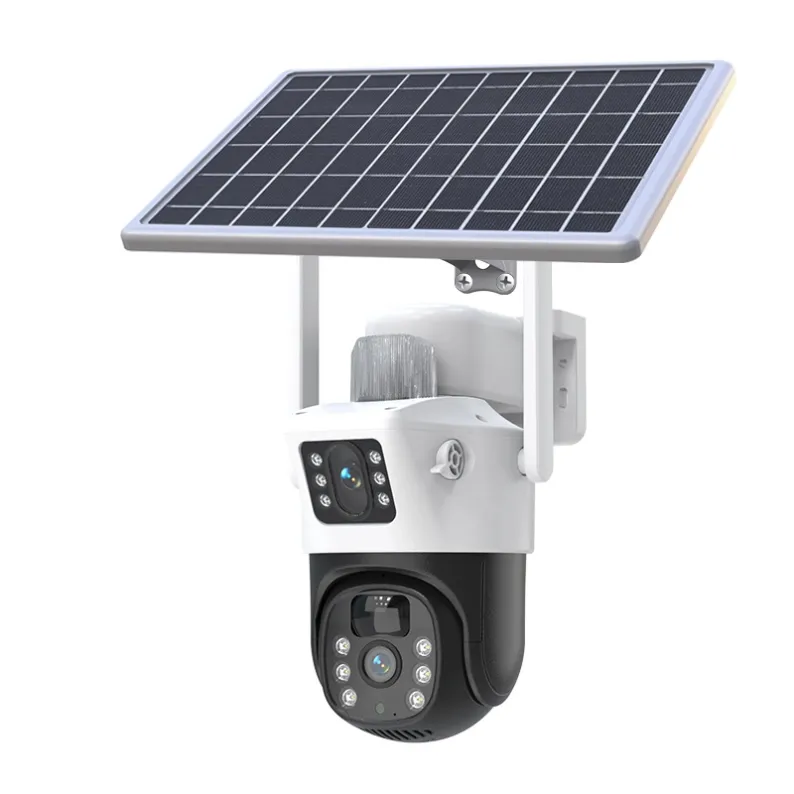
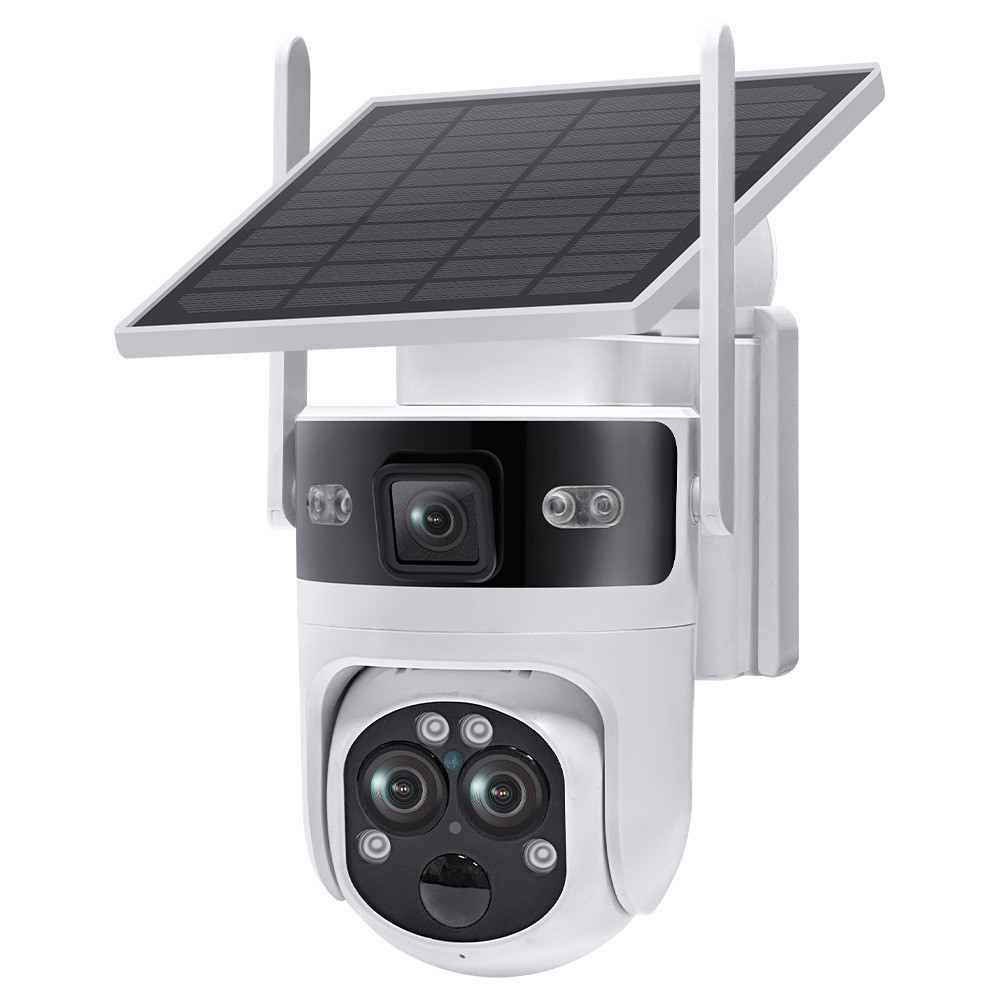
No power at the gate? Solar + 4G models work where there's no wiring — install without trenching.
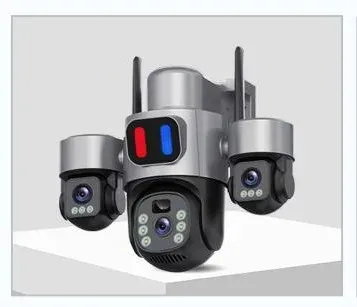
A red/blue flashing alarm model at the gate adds active deterrence (our EXF-QS30A-R6M and EXF-QS12A-B4 class units).
Zone 2 — Barns and equipment storage
What it protects: tractors, tools, feed, fuel — the highest-value, easiest-to-load targets.
One camera covering the barn door (inside, high, looking down the aisle) and one outside covering the approach.
Barns are dark: use models with strong IR range and check the night image before buying.
If the barn is far from WiFi, a 4G model or a long-range wireless link handles it.
Zone 3 — Equipment and machinery yards
What it protects: parked machinery, trailers, fuel tanks.
Cover the yard corners with wide-angle or pan-tilt cameras; 355° rotation lets one camera sweep a whole yard.
Position so no parked machine blocks the view of another.
A high-mounted solar camera avoids theft of the camera itself — and choose models that work without mains power for remote yards.
Zone 4 — Livestock areas
What it protects: animals and early warning — calving, injury, predators at night.
Cover water points and shelter entrances; animals return to these, so cameras there see the most.
PIR motion detection + night vision covers dark-hour activity without draining the battery.
Not an anti-theft feature per se, but a calving-watch camera (live view and motion alerts — not calving detection) pays for itself in peace of mind; many buyers run one just for that.
Zone 5 — Perimeter and field gates
What it protects: remote fields, cut fences, stolen gates, crop/fuel theft at the boundary.
Solar + 4G is the only practical option for most perimeter points — no trenching, no WiFi reach needed.
Camouflage-styled models make the camera less obvious to remove (our ST camo series); combine with one visible camera near the main gate.
Long-range wireless models (our ST series up to 500 m point-to-point) link a far gate back to the house without cellular fees.
Zone 6 — House and outbuildings
What it protects: the family, tool sheds, fuel storage near the house.
Door-level coverage at the house; shed interiors where tools live.
Keep residential placement legal: angle cameras to your own property and check local rules before pointing at public walkways.
Placement rules that apply everywhere
Height 2.5–3 m, angled about 15° down — high enough to avoid tampering, low enough to catch faces.
Aim at approach lanes, not walls; give entry doors an unobstructed view.
Avoid direct sun and light flare at dawn/dusk; position away from bright lights.
Overlap views at critical doors — one camera can be covered, two rarely are.
Let one camera be visible (deterrent) and keep the rest discreet.
Record locally, off the grid: TF-card recording (32–256 GB) with the free app means no monthly fee; solar models keep the battery topped up.
Set the solar panel for your latitude and clear snow/shade in winter — the panel is the camera's lifeline.
A sample plan for a small farm (10–20 acres)
Zone | Camera | Power/connectivity
Main gate & driveway | Dual-lens with IR + full-color night; alarm option | Solar + WiFi (or 4G if no WiFi)
Barn door (inside + outside) | Wide-angle, strong IR | Plug-in or battery
Equipment yard | Pan-tilt 355° | Solar
Field gate (perimeter) | 4G solar; camo if theft is a concern | Solar + 4G
House entry | Compact WiFi camera | Plug-in or battery
Remote barn (500 m from house) | Long-range wireless model | Solar + point-to-point link
That's 5–6 cameras covering the highest-risk points — a realistic first order, expandable later. Buy as a single system: one app for all of them matters more than brand stickers.Starter vs full system: cover the six zones first with one camera each, run the season, then add second angles where events actually happen. Dealers and OEM brands: the same plan becomes a saleable farm kit — camera, panel, card, mounting hardware and one app (EseeCloud, Hieasy or V380 Pro, matching the series) — with your label on the box, which is exactly how farm supply channels usually buy.
FAQ
How many cameras does a farm need? Start with the six zones above: gate/driveway, barn, equipment yard, livestock, perimeter gate, house. For a small farm that's usually 4–6 cameras; add more after you see the coverage gaps.How high should farm cameras be mounted? About 2.5–3 m, angled roughly 15° down — high enough to prevent tampering, close enough to identify people.Can solar cameras work on a remote farm? Yes — solar + 4G models are the standard answer for perimeter and field gates: no wiring, no WiFi needed. Confirm your winter temperatures and sun hours when ordering.Will cameras catch anything at night? With IR or full-color night vision, yes — check the model's IR range and night image before you buy, especially for dark barns.Do I need a monthly subscription? No — our cameras record to TF cards (32–256 GB) and play back through the free app. No cloud fees required.Will cameras alarm thieves away? Visible cameras deter most thieves who check for them first; models with red/blue flashing lights and sirens add active deterrence at gates and equipment yards. Honest boundary: cameras deter and record — they don't physically stop a determined thief, so pair them with locks and lighting.Is it legal to point cameras at the road or neighbors? Laws differ by state/country. Keep cameras aimed at your own property and check local rules — the plan above is designed to cover your farm, not public areas.
What to prepare before your inquiry
For a farm-specific recommendation, send us:
Farm size & layout — acreage, zones you want covered (gate/barn/yard/livestock/perimeter).
Power situation — mains power available where? Or all solar needed?
Connectivity — WiFi reach, or 4G where there's no signal?
Winter conditions — lowest temperatures and winter sun at your location.
Buying role — end-user, dealer, or OEM brand; quantity and packaging.
Budget band — per-camera target price so we match models, not upsell.
Buy direct from the factory
Farmers, dealers and brand owners buy direct from the manufacturer:
100+ models in one catalog — solar, 4G, WiFi, battery, AOV, optical zoom, alarm, camo and long-range models.
OEM/ODM welcome — your brand, our factory, small MOQ, fast delivery.
Free technical support for app, firmware and packaging customization.
Browse the solar camera category on our website: www.keencampro.comRequest a quote — contact our sales team to confirm models, coverage and MOQ today:
WhatsApp: https://wa.me/8618948579719
Email: diana@keencampro.com
Website: https://www.keencampro.com/
#KeenCamPro #FarmSecurityCamera #RanchCamera #FarmCameraPlacement #BarnCamera #SolarCameraFarm #4GSecurityCamera #FarmEquipmentTheft #LivestockCamera #OutdoorCamera #OEM #Wholesale